
baby faces
having a newborn really makes you question our weird current impulse to smooth over everything

As of nearly eight weeks ago, I am now the mother to a tiny baby—a daughter.
There is a biological reason that new parents find themselves unable to do little else but stare at their new baby: It’s how you learn who they are. I love to watch my daughter’s micro-expressions unfold and pass across her face. She can go from a wide, toothless smile to a confused grimace in two seconds. When she gets a particular look around the eyes, I can tell she is tired. When the corners of her mouth pull down, I know she’s about to tell me she’s sad about something. Her forehead scrunches up when she’s trying to figure out something new.
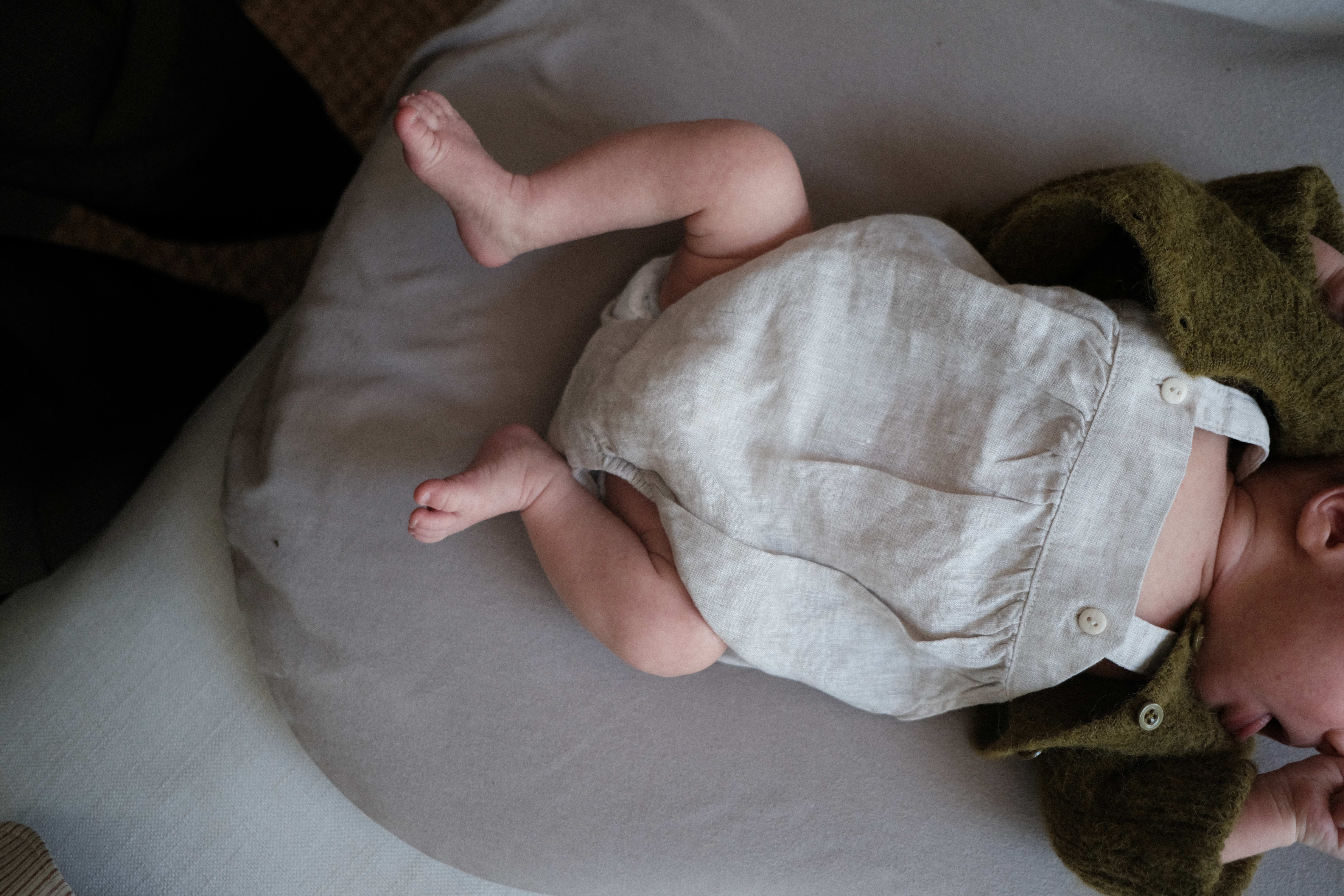
I can write this all down, but it’s more significant to me that I don’t have to. In the moment, I can see what she’s trying to communicate. I can observe her feelings. I can see her becoming more and more herself each day.
It’s funny to me that so much of how beauty and “aesthetics” are marketed rotates around the concept of youth. Youth as smoothness, youth as indecipherable. Youth as flawless, unrumpled skin. Hang out with a newborn and you will realize none of these things are true—not exactly. Yes, her skin is very soft and her cheeks are getting plumper by the day, but I have hardly ever witnessed a face so unrestrained in its expression. Every furrow of her brow, every curve at the corner of her lips has a purpose. It’s to communicate, yes, but it’s also to shape her face into a reflection of who she is.
A few nights ago my partner and I went out to dinner for our anniversary—our first evening out alone!—and I started talking about this. About the disappointing seep of expression-sapping aesthetic treatments; about the remarkable similarities between a Botoxed face and and AI-generated piece of writing—both some smoothed over, vacant approximation of a more textured, beautiful possibility. He told me about how a friend of his from college had parents who were both sculptors. Once, they were commissioned to create a sculpture of a baby, and they said that it was one of the more uninteresting projects they had ever undertaken. Babies, like my daughter, are so early in the process of becoming themselves. I’m seeing the beginnings of her expressions, which will slowly and beautifully settle themselves into her face, and become the lines and textures that the sculptors craved. The specificities that reflect the life and the personality behind them.
I understand that people defend smoothing aesthetic treatments as a desire to not lose sight of yourself. To continue to “identify with the person in the mirror,” as the writer of a rather infamous aesthetics-focused newsletter recently put it. But I wonder if she’s being entirely honest about that impetus. With what version of yourself are you trying to identify? Some mythical younger iteration, who made more skin-preserving choices and who religiously slept 10 hours a night? It often feels that this identification becomes a cover for buffing away our identifiers. It’s like when people run a piece of writing through an AI platform to “improve” it. Is it actually improved, or is the specificity that made it your own work stripped away?
I am someone who likes writing for the sake of writing; I am also someone with a distinct lack of a poker face, and I’d like to keep it that way. I am also someone with a newborn, so I am quite tired but also very happy.
I want my daughter to be able to read my expressions like I am learning to do hers. I want her to grow up in a world of messy, imperfect, specific art and writing, and to be surrounded by faces that have something to say.
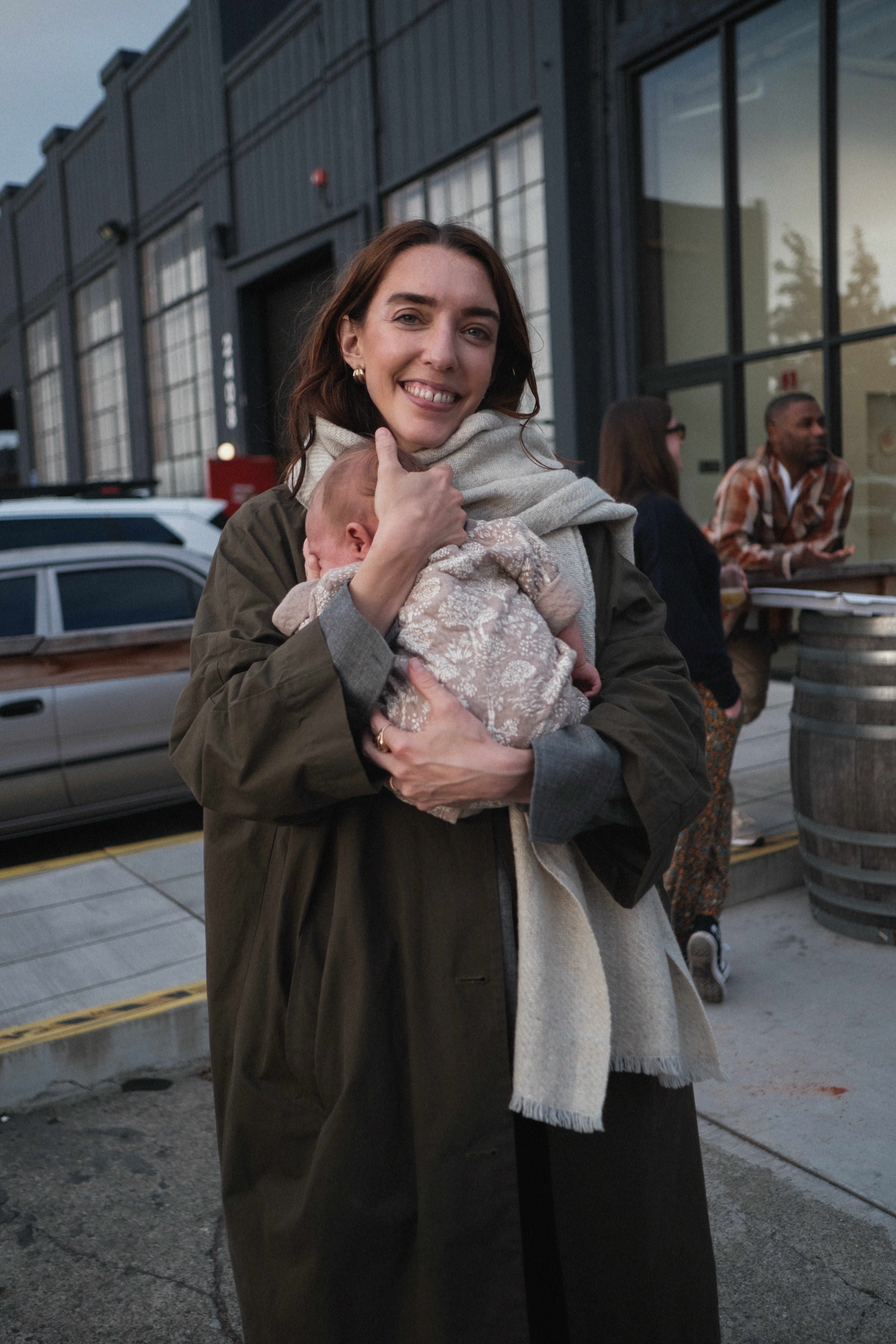
You expect certain things when you have a baby—exhaustion, confusion, a pervasive feeling of am-I-doing-this-right. What I did not expect and am so grateful for is a renewed enthusiasm for our specificity. I love watching my daughter’s face morph itself in all kinds of different expressions. I love reading picture books to her by Jon Klassen and Carson Ellis and Mac Barnett, knowing that these are pieces of writing and works of art that these people created themselves to make kids like mine smile and wonder. I can’t wait to see the weird, whacky art that my daughter makes with her own hands and imagination.
The world of AI and aesthetic optimization tells us that we are at our best when we run our work and our bodies through the machines they’ve made to smooth out our rough edges. They’ve forgotten that they are the best part.
Congratulations! And of course I agree with you. As a 63 year old with a lived-in face, and as the grandmother of a nearly four year old, I observe how not only do we read her expressions, she reads ours. I worry that people who erase their ability to make their faces expressive will become irrelevant, dismissed because they are blank and unreadable. And on a more immediate level, when I see people with their blanked out faces, I see them as insecure and vulnerable, unable to see their own worth, and that is a dangerous thing to signal so obviously. I also don't see, in the real world, any proof of beauty as a guarantee of happiness or wealth or anything else social media would like to pretend it is. Very ordinary looking people, often with creases in their skin indicating experience and life, are loved and loving and successful and happy.
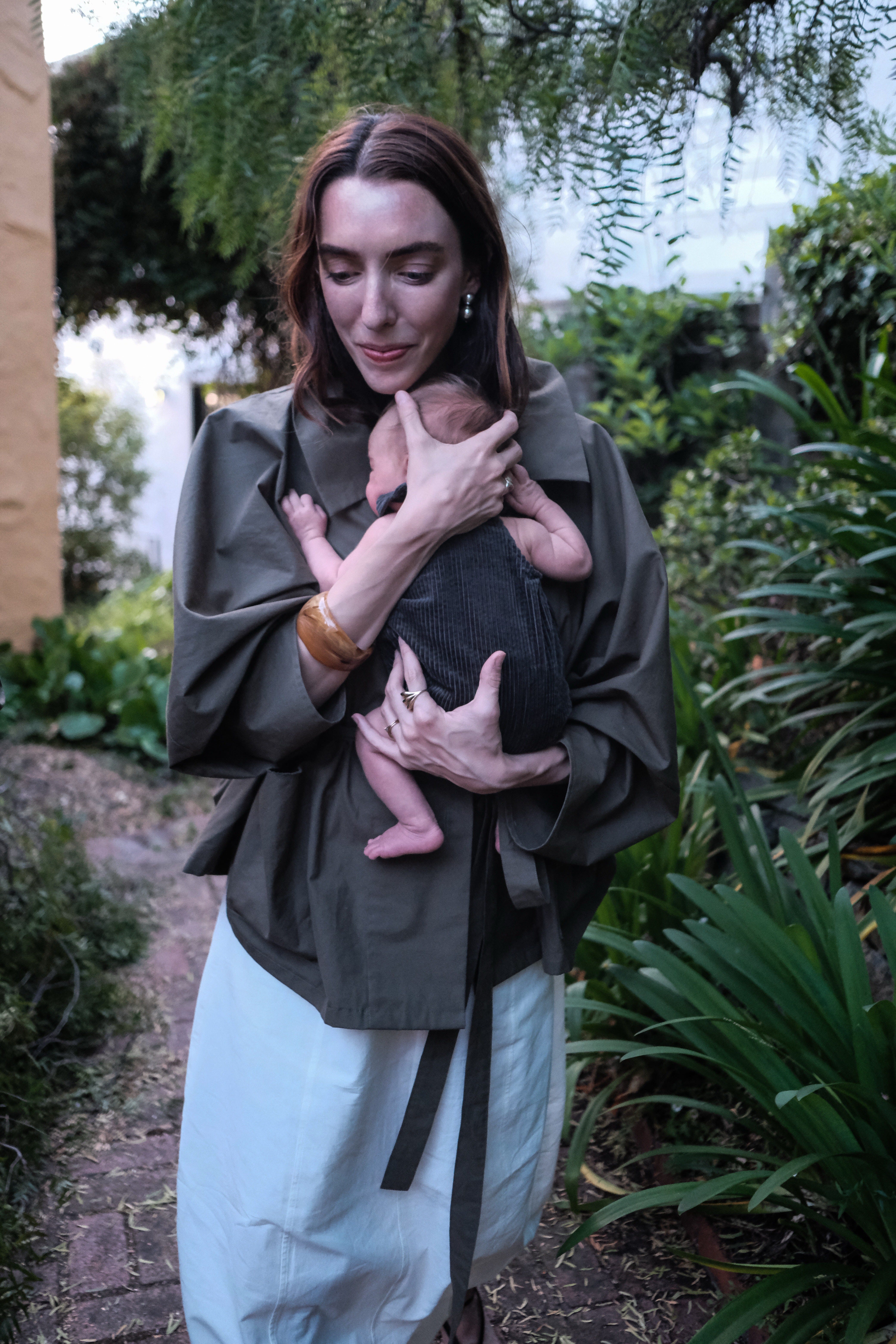
The pictures of you two together are so special. Love all the warmth and light in the textures and colors of both of your garments✨